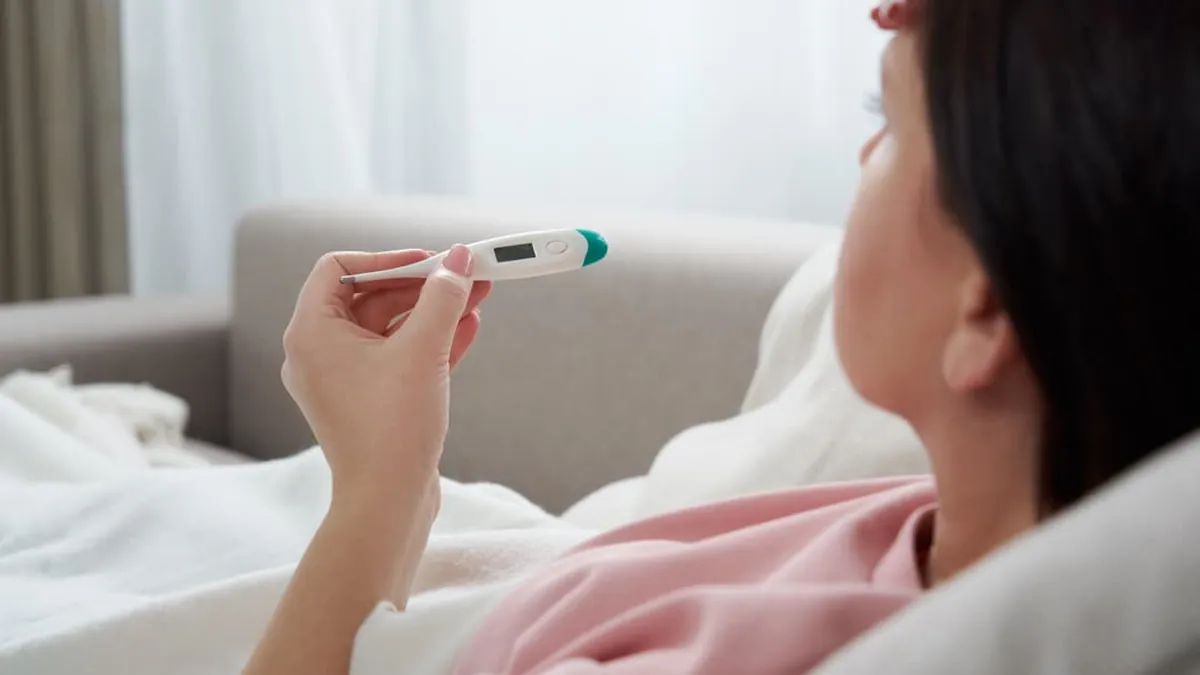
Yes. A body temperature of 38°C — which is 100.4°F — is the widely used threshold for a fever in both adults and children. Below that, readings in the high 37s are usually described as a raised or low-grade temperature rather than a true fever, and a healthy adult's temperature typically sits somewhere between 36.1°C and 37.2°C (97–99°F), moving up and down during the day. This page explains how the threshold is defined, why the same person can honestly read 37.4°C in the morning and 37.9°C in the evening without being ill, and the warning signs that matter more than the number itself. This article is general information, not medical advice; if you are worried about your own or your child's health, contact a clinician.
A quick note before the details: thermometers, guidelines and doctors do not all draw the line in exactly the same place, because normal is a range and the reading depends on where and how it was taken. What follows reflects the definitions used by mainstream sources such as MedlinePlus and the NHS, and it is written to help you interpret a reading — not to diagnose anything.
What Counts as a Fever?
A fever is a body temperature that has risen above the normal range as part of the body's response to infection or illness. Most clinical guidance defines it as a temperature of 38.0°C (100.4°F) or higher measured orally, rectally or in the ear. Temperatures between about 37.5°C and 38°C are often called low-grade or raised — worth watching, especially if they are climbing, but not yet a fever by the standard definition. At the other end, 39.4°C (103°F) and above counts as a high fever in adults and is one of the points where medical advice should be sought promptly, as the warning-signs section below explains.
The rise itself is deliberate. The brain's thermostat, the hypothalamus, raises the body's set point to make conditions harder for bacteria and viruses and to support the immune response — which is why a fever usually comes with shivering while it climbs and sweating as it breaks. This is also why fever is different from hyperthermia, meaning overheating from heatstroke or extreme exertion, where the set point has not changed and the body cannot cool itself. Heatstroke is an emergency in its own right and typically involves temperatures above 40°C together with confusion or collapse.
Normal Body Temperature Is a Range, Not One Number
The famous 98.6°F (37°C) normal is a 19th-century average, not a personal target. Modern measurements put average adult body temperature a little lower, and any individual's healthy reading can sit anywhere in roughly the 36.1–37.2°C (97–99°F) band. Your own temperature also follows a daily rhythm: it is usually lowest in the early morning and highest in the late afternoon or evening, with a swing of about 0.5°C (roughly 1°F) across the day. Exercise, a hot bath, heavy clothing and, for women, the menstrual cycle can each push a reading up temporarily. Older adults often run a lower baseline, which means a reading of 37.8°C can be more significant for an 80-year-old than for a 25-year-old. The practical takeaway: judge a reading against the person's usual baseline and how they feel, not against 37.0°C alone.
Why Where You Measure Changes the Reading
Different measurement sites give systematically different numbers, because some sit closer to the body's core than others. Rectal readings track core temperature most closely and typically run about 0.3–0.6°C (0.5–1°F) higher than oral readings; they are the reference method for babies. Ear (tympanic) readings are similar to rectal when the probe is positioned correctly, but earwax or a poor angle can pull them down. Oral readings are the everyday standard for older children and adults. Forehead (temporal) scanners are quick and non-invasive but can read slightly low, especially if the skin is sweaty. Armpit readings are the least precise and usually run about 0.3–0.6°C lower than oral. This is why a 38°C threshold quoted for one site cannot be applied blindly to another — and why you should always note the site alongside the number.
Fever in Babies and Children: Why Age Changes Everything
For babies, age matters more than the exact number. A rectal temperature of 38°C (100.4°F) or higher in an infant under 3 months old should always be checked promptly with a doctor or an urgent-care service, because young babies can become seriously unwell quickly and cannot show the usual signs clearly. Between 3 and 6 months, a temperature of about 38.9°C (102°F) or higher is generally the point to call a clinician — or sooner if the baby seems unwell at any temperature. Do not wait for a particular number if a young baby is feeding poorly, unusually sleepy, floppy, or has a weak or high-pitched cry.
For older babies, toddlers and children, behavior is usually a better guide than the thermometer. A child at 38.5°C who is drinking, responsive and playing between bouts of rest is generally less concerning than a child at 38.1°C who is listless, not drinking or difficult to wake. Fevers from common viral illnesses in children typically last two to three days. Keep offering fluids, dress the child lightly, and re-check the temperature periodically rather than constantly — using the same measurement site each time, so the comparisons are fair.
Warning Signs: When to Seek Medical Care Promptly
Whatever the reading, seek medical care promptly — urgently if symptoms are severe — for any of the following. In adults: difficulty breathing, chest pain, confusion or difficulty waking, a stiff neck, a severe headache, repeated vomiting, signs of dehydration, a rash that does not fade when pressed, or a fever above 39.4°C (103°F) or one that lasts more than three days. In children: difficulty breathing, unusual drowsiness, a seizure, a bulging or sunken soft spot in a baby, signs of dehydration such as very few wet diapers, or a fever lasting more than about three days — sooner for babies under 6 months. People who are pregnant, immunocompromised or living with serious long-term conditions should ask for advice earlier rather than later. This list is not exhaustive: if someone seems seriously ill, trust that judgment over any threshold in this article.
How to Measure Temperature Accurately
A threshold is only useful if the reading is reliable. For an oral reading, wait at least 15–30 minutes after eating, drinking anything hot or cold, or smoking, and keep the probe under the tongue with lips closed for the full measuring time. For an ear thermometer, gently straighten the ear canal as the manufacturer directs and take repeat readings in the same ear. For babies, rectal measurement with a digital thermometer designed for the purpose is the most accurate home method. Whatever the site: use the same method for repeat readings so you are comparing like with like, write down the time, the site and the reading, and if a result seems out of line with how the person feels, wait a few minutes and measure again before acting on it.
Caring for a Fever at Home
While a fever runs its course, the goal at home is comfort and hydration rather than chasing a perfect number. Encourage regular fluids — water, oral rehydration drinks, soup — because fever increases fluid loss through sweating and faster breathing. Rest helps; heavy blankets and bundling do not, and can push the temperature higher, so dress in light layers and keep the room comfortably cool. Fever-reducing medicines such as acetaminophen (paracetamol) or ibuprofen are generally used to relieve discomfort — the headache, the aches, the misery — rather than to force the thermometer down to 37°C, and they should always be used exactly as the package or a clinician directs, with children's doses based on weight. Never give aspirin to children or teenagers with a viral illness. If eating is poor for a day or two but drinking continues and the person is alert, that is typical; the warning signs in the previous section are the triggers for seeking care.
Converting Body Temperatures Between Celsius and Fahrenheit
Many thermometers can switch scales, but if yours cannot, the conversion is easy — or use the Celsius to Fahrenheit converter. The body-temperature range converts as follows: 36.1°C = 97.0°F; 36.5°C = 97.7°F; 37°C = 98.6°F; 37.5°C = 99.5°F; 38°C = 100.4°F (the fever threshold); 38.5°C = 101.3°F; 39°C = 102.2°F; 39.4°C = 103°F (a high fever); 40°C = 104°F. Notice how small the gaps are: the whole distance from normal to high fever is under 3.5°C, which is why guessing conversions — or using rough mental shortcuts — is a bad idea with body temperature. The step-by-step formula is covered in our companion guide, How to Convert Celsius to Fahrenheit.
Common Mistakes When Checking for a Fever
The mistakes that cause the most confusion: feeling the forehead with a hand and treating it as a measurement — skin feels hot or cool for many reasons and is not a thermometer. Measuring straight after a hot drink, a bath or coming in from the cold, then treating the number as settled. Comparing readings from different sites — an armpit 37.6°C and an oral 38.1°C taken ten minutes apart may describe exactly the same body temperature. Automatically adding a degree to an armpit reading without noting that you did, which double-counts when the next reading is taken somewhere else. And focusing on the number alone in an older child, when alertness, drinking and breathing tell you far more about urgency.
So: 38°C (100.4°F) is a fever by the standard definition, 36.1–37.2°C is the usual healthy range, and the site, the time of day, the person's age and their symptoms all shape what a reading actually means. Measure consistently, watch the person as well as the number, and seek care promptly for the warning signs above, or for any fever at all in a baby under 3 months. If your thermometer only shows one scale, the Celsius to Fahrenheit converter translates a reading exactly — and remember that this article is general information, not medical advice.