What body fat percentage actually measures
Two people step on the same bathroom scale and see the same number — 160 pounds. One of them lifts weights four times a week and has broad shoulders and thick legs. The other hasn't exercised in years and carries most of that weight around the waist. The scale treats them as identical, and a BMI chart would file them under the same category. Their health risks are not identical, though. Body fat percentage is the number that tells you the difference: it splits your total weight into fat mass and everything else — muscle, bone, water, organs — and reports fat as a share of the whole.
That split matters because a pound of fat and a pound of muscle do very different things inside you. Fat tissue, especially the kind packed around your organs, is metabolically active: it releases hormones and inflammatory signals that nudge blood pressure, blood sugar, and cholesterol in the wrong direction when there's too much of it. Muscle does the opposite — it soaks up glucose, supports your joints, and keeps your metabolism humming. Two bodies at the same weight can have wildly different ratios of the two, which is why the percentage is a sharper health signal than the scale alone.
Body fat percentage also includes a floor you should never try to cross. Some fat is essential — it cushions organs, insulates against cold, and keeps hormones and cell membranes working, as the National Institutes of Health describe in their health resources. That's why no healthy target is ever zero, and why extremely low readings are a warning sign rather than an achievement. The useful question is never “how low can I go” but “am I sitting in a range that supports the life I want.”
The four ways to measure body fat percentage
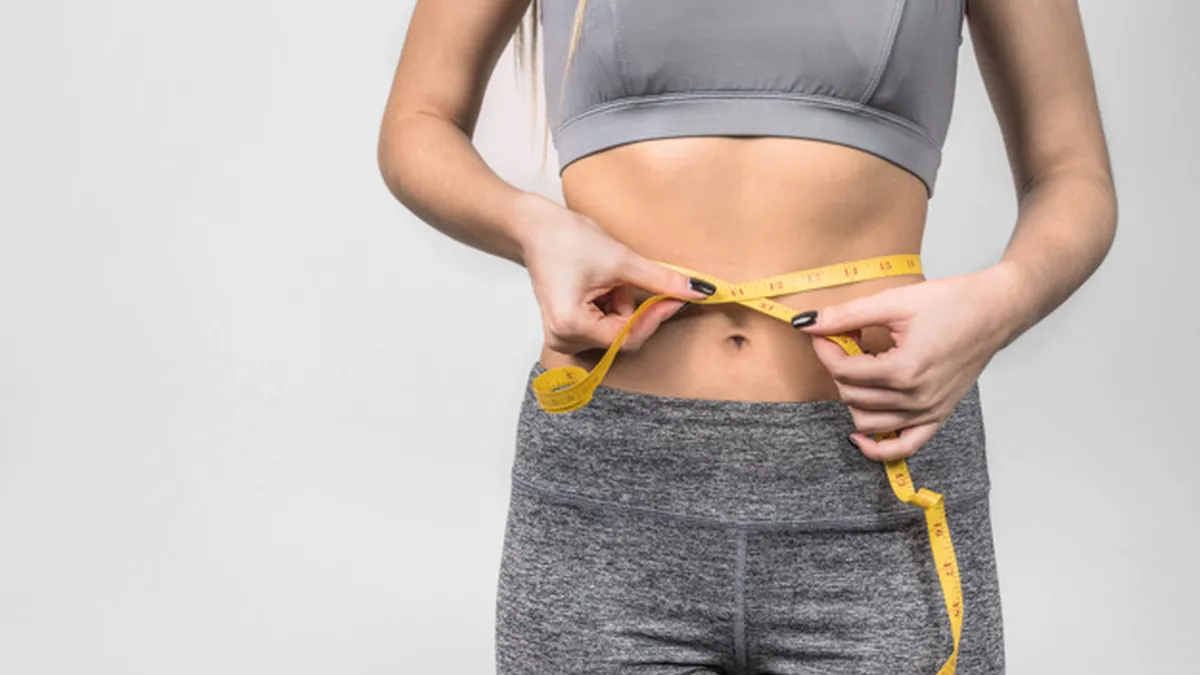
If you never visit a lab, you still have four realistic ways to estimate the number, and they're not equal. The cheapest is the Navy tape method: you measure your neck and waist (plus hips if you're a woman) and your height, then plug the numbers into an equation developed for the U.S. Navy. It typically lands within a few percentage points of lab methods when the tape is placed carefully and consistently. It costs nothing, takes two minutes, and it's the math behind most online estimators.
Skinfold calipers are the next step up in effort. A tester pinches your skin at three to seven sites — triceps, belly, thigh, and so on — and the thickness of each fold feeds a formula. Done by a skilled tester with good calipers, this can be impressively accurate. Done by a friend with a cheap plastic caliper from the internet, it mostly measures enthusiasm. The method's weakness is the human holding the tool, not the math underneath it.
Then there's bioelectrical impedance — the technology inside smart scales and handheld devices. It sends a tiny, painless current through you and estimates fat from how much resistance it meets, because water-rich muscle conducts better than fat. The catch is that anything shifting your hydration shifts the reading: a hard workout, a salty meal, a glass of wine, even the time of day. Used at the same time under the same conditions, a smart scale tracks trends decently; used randomly, its readings bounce like a stock ticker.
What counts as a healthy body fat percentage
DEXA is the reference method everything else gets judged against. It's the same machine used for bone-density scans, and it maps fat, muscle, and bone across your whole body with remarkable precision. It also reports where the fat sits, which matters more than most people realize. The downsides are cost, access, and a small dose of radiation — it's a periodic checkup tool, not a weekly habit. If you ever get one, treat it as your calibration point and track against it with a cheaper method between visits.
So what counts as a healthy body fat percentage? The most widely published reference ranges come from the American Council on Exercise, and they're commonly cited across fitness and health writing. For men: athletes 6–13%, fitness 14–17%, acceptable 18–24%, and obesity above 25%. For women: athletes 14–20%, fitness 21–24%, acceptable 25–31%, and obesity above 32%. These are population benchmarks, not prescriptions carved in stone — but they give you a map instead of a single pin.
Notice the floors built into those ranges. Essential fat — the amount below which basic body functions start to suffer — is roughly 2–5% for men and 10–13% for women. Women need more essential fat because of reproductive physiology, which is why the entire female scale sits higher and why comparing your number to someone of the opposite sex is meaningless. If a reading ever dips toward essential-fat territory, that's a signal to eat more and talk to a clinician, not a trophy.
Why body fat percentage tells you more than BMI
Age and goals shift the picture too. A competitive athlete chasing 10% is playing a different game than a 55-year-old who wants strong bones, good balance, and an active decade ahead — for the latter, preserving muscle often matters more than shaving fat. “Healthy” also isn't one number but a band: landing anywhere inside the fitness-to-acceptable range while feeling strong and energetic is a far better outcome than hitting a low number while feeling exhausted. The range serves your life, not the other way around.
This is where body fat percentage beats BMI so clearly that it's almost unfair. BMI only knows your weight and height — it can't tell whether your 190 pounds are built from deadlifts or desk lunches. A muscular person can land in BMI's “overweight” band while carrying less fat than a sedentary person BMI calls “normal.” We unpack why BMI is a screening tool, not a diagnosis in a companion guide. The formula isn't broken; it was just never designed to see inside you. Body fat percentage was.
The mirror-image mistake is what researchers sometimes call normal-weight obesity: a “healthy” BMI paired with a high body fat percentage. It usually belongs to people who never exercise but stay slim through small appetites or fast metabolisms — “skinny fat,” in gym slang. They can carry the same elevated metabolic risk as visibly heavier people, and BMI gives them a clean bill of health they haven't earned. It's one of the strongest arguments for knowing your percentage even when the scale looks fine.
How to calculate body fat percentage at home
There's one more layer the single percentage can't show: location. Fat stored just under the skin (subcutaneous) is relatively quiet, while fat packed around your liver and intestines (visceral) is the troublemaker most strongly tied to heart disease and diabetes. Two people at 22% body fat can have very different visceral loads — the apple-shaped one typically carries more risk than the pear-shaped one at the same percentage. A waist measurement alongside your percentage catches what the percentage alone misses.
For most people, the Navy tape method plus a good calculator is the sweet spot between accuracy and effort. Measure first thing in the morning, tape snug but not digging in, standing relaxed — no sucking in your stomach, no holding your breath. Men need height, neck, and waist; women add hips. FreeToolsBox's Body Fat Calculator runs the official equations for you, so the only skill you need is honest tape placement. Three minutes, once a month, beats a perfect method you never use.
The real power move is consistency, not precision. Measure at the same time of day, in the same conditions, with the same tape, and write the number down — a notes app is fine. A single reading is a rumor; a line of monthly readings is a story. You're watching the slope: is the percentage drifting down while your strength holds steady? Then whatever you're doing is working, even if the scale hasn't moved.
Mistakes that make the number lie
Here's what that story can look like. Say you start at 26% in January and read 24.5% in March. The scale might show the same 170 pounds both months, which feels like failure — until you realize you've traded roughly two and a half pounds of fat for muscle. That's recomposition, and it's invisible to every tool except a body-fat estimate. People quit programs that are working because the wrong number told them nothing was happening.
Smart scales deserve their own warning label. Weigh yourself dehydrated after a hot workout and the scale will cheerfully report that you “lost fat” — you lost water. Weigh yourself after a big salty dinner and it reports the opposite. Foot calluses, wet feet, a full bladder: all of it moves the needle. If you use BIA, make it a ritual — same morning, after the bathroom, before food — and judge the four-week average, never a single morning.
Tape-measure errors are sneakier because they feel like being careful. Measuring over clothes adds phantom inches. Measuring at a different spot on your waist each month manufactures fake progress or fake backsliding — pick the narrowest point or the navel and never deviate. And the classic: sucking in your stomach because the number feels like a grade. It's not a grade; it's a compass, and a compass only works when it points north honestly.
What the number still can't tell you
The biggest tracking mistake of all is switching methods halfway through. A smart-scale reading, a caliper reading, and a DEXA scan are three different instruments with three different biases — comparing them is like comparing temperatures in Celsius, Fahrenheit, and “feels like.” Pick one method and marry it for at least three months. If you upgrade to a better method later, start a fresh trendline rather than stitching the old numbers onto the new ones.
Even a perfect percentage leaves important questions unanswered. It won't tell you your visceral fat level, your blood pressure, your cholesterol, or how you actually feel climbing stairs. It says nothing about muscle quality — a 70-year-old and a 30-year-old at 20% are in very different shape — and it can't see fitness at all. Treat it as one instrument on a dashboard, not the dashboard.
That's why the number works best in company. Pair it with a waist measurement, a strength benchmark you can retest (push-ups, a plank, a farmer's carry), and how your energy feels through the day. If your percentage is drifting down while your waist shrinks and your strength climbs, you have converging evidence — the closest thing to certainty that home tracking offers. Any single metric can lie to you; three of them rarely do.
Making the number useful
Know when to hand the question to a professional. A percentage that plummets without explanation, one that sits at or below essential-fat levels, or a high reading paired with symptoms like constant fatigue or shortness of breath all deserve a clinician's eyes, not a blog post. Body fat percentage is a screening lens — excellent for direction, never a diagnosis.
To make the number useful, trade targets for ranges. Instead of “I must reach 15%,” try “I'll work from 24% toward the 18–20% band over the next six months.” Range goals survive bad weeks; single-number goals shatter on them. And frame the mission as fat loss, not weight loss — the difference is what you keep. Resistance training two or three times a week plus enough protein preserves the muscle you'd otherwise lose while the fat comes off.
The simplest setup that actually works: run FreeToolsBox's Body Fat Calculator once a month under identical conditions, glance at FreeToolsBox's BMI Calculator for the screening-level view, and keep a one-line log. When the trend moves the right way for eight to twelve weeks, change nothing. When it stalls, adjust one thing — food, training, or sleep — and watch for another month. The number was never the point. The direction is.